Wikipedia

Search results

Showing posts with label Energy. Show all posts

Thursday, November 3, 2016

Art of Dansaekhwa / Resonance of Ki (氣, Energy)

Resonance of Ki (, Energy)

                                         Yoon Jin Sup(Art Critic)

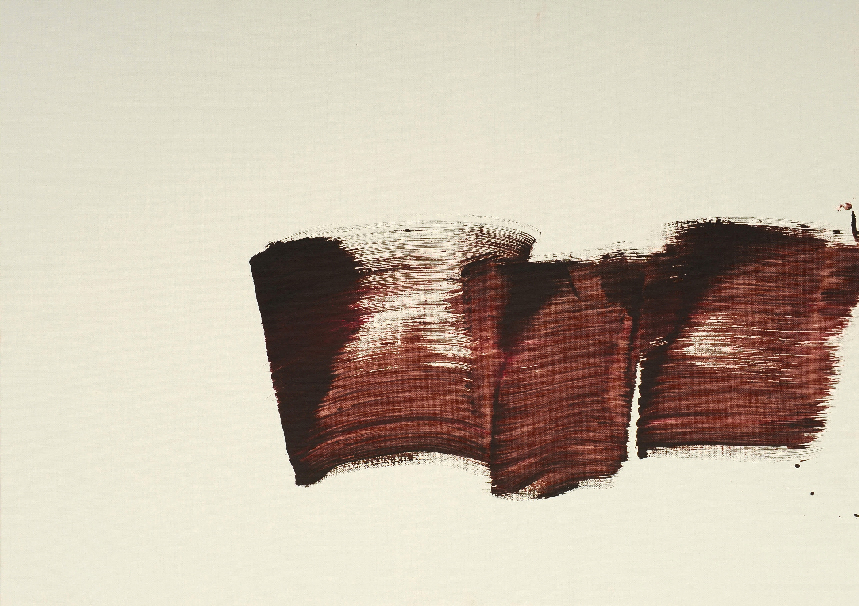
 Park Daa Won visualizes the vitality of life with one bold and skillful stroke with her new body of works in her a solo exhibition. This exhibition is to show her unique works she painted with spontaneous and intuitive lines in the state filled with energy as if she practiced Zen with all her Ki (, energy) and spirits. This exhibition is significant in a lot of senses in light of the Dansaekhwa (monochromatic paintings) movement popular at home and abroad.


     Art of Tansaekhwa /Nowhere in Blue / Park Daa won

                  Park’s bold strokes runnning on light beige or dark blue planes on wide canvases are based on the One-Stroke Theory coined by the Chinese artist and philosopher of painting, Seok-do. One-Stroke Theory aims to ultimately reach ‘a pure state of primitive essence.’ In other words, the artist’s stroke reveals a longing for ‘the un-scattered state of nature in its primitive form.’ In this perspective, Seok-do claims, ‘One stroke is the basis of ten thousand strokes and ten thousand shapes.’ The fact that Seok-do’s philosophy is sought after in contemporary paintings - in conjunction with issues on artificial intelligence - points to contemporary artists who insist on the technique of single strokes, like Park Daa Won. In short, Park is an artist who persists on the analog method of creation in digital times. Thus, it can be presumed that Park had a strong sense of purpose in her decision and praxis of One-Stroke Theory. Consider the following texts disclosed from Park’s artist notes:   
 “When I begin with my strokes, I pray for time, space and history of the universe; for God’s presence and His love. I hope to share these sentiments with anyone who looks at my paintings.”
                  Art is a way of expressing the mysterious rules of the universe with a single stroke or a dot. Park Daa Won’s statement may appear rather grandiose, but it includes her vision of the universe or her perspective of time, space and history. The artist realizes her artistic intuition through her body of works. At times, the empty canvas may appear as an object of terror for an artist. The entirety of these ideas act as a metaphor of the Great Void, also known as the universe in its primitive form. In this sense, the two-dimensional planes covered in sun-bathed hues of beige (Now Here series), structural hues of brown (Becoming series), or universal hues of blue (Now Here in Blue series) may all be considered as a metaphor of the universe at large. Therefore, Park’s one-stroke painting with her single-color brush embodying all her energy signifies the primitive act of creating ripples of energy into the uninhabited vacuum of the universe. If such energy is regarded as the concentration of the artist’s Ki collected from the body, the act of translating Ki onto the canvases can be observed as a primitive form of artistic gesture. Park’s employment of the brush is an artistic event occurring on canvas, much like the cosmic event widely known as the Big Bang. Although the scope of her artistic endeavors is limited to the canvas, it may also be defined as the performance of body.


      Art of Tansaekhwa /Nowhere in Blue / Park Daa won

                  Park Daa Won’s paintings do not leave room for modification or repainting, which means that the act of making a single stroke also defines completion. In other words, the act of repainting negates the very notion of completion, as this very act equates to the acceptance of the artist’s failure to attain perfection. This illuminates the fact that the chances of failure for perfect completion of Park’s work is very high. However, considering the artist’s exceptional level of standards for perfection, one may assert with confidence that the works displayed in this exhibition are works completed with outstanding quality.  
Park Daa Won’s act of painting aims to emulate the primitive state of the world - the Great Void. This may also relate to the state of chaos or the state of total darkness as mentioned in the book of Genesis in the Bible and the Great Ultimate in the Book of Changes (周易). In Knowledge Wanders North (知北遊篇), Chinese philosopher Zhuangzi (Chuang-Tzu) engaged this expression to convey that the ‘intangible’ source of the world, as drawn from the ancient philosophy of Taoism(). The monochromatic canvas set forth by the artist represents a physical phenomenon; but it also serves as a medium that triggers psychological events such as tranquility or terror. The subjects to be translated onto canvas are chosen entirely by the artist. Depending on the artist’s capacity, the empty space may become a product of meaninglessness or end up as a psychological event. This likens to what we know as Jackson Pollock’s act of dripping technique - an artistic phenomenon taken place outside of the typical canvas-on-easel technique – which was to become an artistic phenomenon to go down in history.  

  Art of Tansaekhwa /Now here -Beoming / Park Daa won

Park Daa Won’s painting technique can be surmised as an act of inspiration, breathing meanings onto the empty canvases through a single stroke without leaving room for repainting. The act of waiting is compulsory in this process. Once an idea is conceived, the next step is to collect Ki, energy in its preliminary stage. When Ki is collected, the artist approaches the canvas with a brush dipped heavily in one color followed by the controlled breathing in line with the intuitive employment of brush strokes. Therefore, the discursive process of collecting Ki and the intuitive conception of these psychological events are all part of what appears to be a shorter counterpart and the final act of brush strokes. These are substantial reasons to regard Park Daa Won’s unique way of creation as an act of performance.
    
 In the end, such creative methods interpreted as acts of performance, may also be read as an effort to realize the rules of nature associated with life. The rules of nature such as the rhythmic strengths and weaknesses of lines, and controlled breathing in relation to span of time, life and death of creatures, movements of space, and cyclic changes of seasons and so on are all visualized through extremely reductive acts. Park Daa Won’s monochromatic paintings, therefore, have meanings of setting back events through reductive and primitive acts. At this point, the events refer not to physical phenomenon, but to cultural ones. In that not many of countless events on the canvases have meanings, the performance of body by Park Daa Won is based on the fact that it has its own meaning as a one-time event. Unfolding his theory on the game of Go, Lee Ufan once put that when he places a stone on the Go board, tension spreads throughout the entire board; and such is the case with Park Daa Won.  


      Art of Dansaekhwa  /  Now here  /  Park Daa Won
                  
Park Daa Won’s works start with drawing a line with a brush dipped in single-color paint onto the under painted canvas. The stroke created at this point is made by intuition accompanied by incidental effects of paint splashed or dripped in the process. Sometimes split brush brings about rough coats and runs. Such traces of brush constructs incidental effects within the given frame. This is also the point when Ki springs up. The flow of Ki transferred from the tranquil state of contemplation where the mind has achieved peace, sometimes in its intense and sometimes in its simple form, is translated onto the canvas in its purest and primitive form by the ends of the brush.  I have had the privilege to expound on the resonance of Ki in Park’s solo exhibition not long ago.


    ‘Park Daa Won’s paintings are statements of resonance revealed by touches of brushes. How are touches of brushes resonant? Is it possible to introduce this word which shows auditory effects to form? When a brush encounters the surface of a plane and finally parts with it, I see its traces remaining on the canvas. It is as if the traces of replica have disappeared yet seems to wander about somewhere else. A silent event which occurred ‘now and here -hic et nunc’ sets off a silent echo like a wavelength of a ripple. A dot and a line drawn on the canvas brings about silent waves. Park’s paintings are a statement of resonances echoed by touches of brushes manifested by the dots and lines on the space of a canvas.’


       Art of Tansaekhwa  /  Now here  /  Park Daa Won

I wanted this essay to be titled as “Resonance of Ki().” How does Ki resonate? First of all, Ki is the state of being alive. It implies the ‘vital impetus (élan vital)’ by Henri Bergson, which means that life is in present continuous state, in an endlessly moving form. I exist Now Here (the integrated state of the past, present and future); and thus as an existential being, I (the artist) transfer onto the canvas the vivid experiences of my life. At this point, the essence of life projected onto the canvas extends outwards to the larger world through the appreciation of the viewers. Such chain of these benefits may be identified as ‘Resonance of Ki.’

 Park Daa Won’s monochromatic paintings are both the Book of Life and the ultimate medium that reaches for the primitive universal phenomenon. In any cases, they become imageries in sometimes discontinuous rhythms and sometimes in lengthy spans. It is clear then, that Park’s ‘Now Here Series’ are products of seasoned calligraphic skills stemming from ancient philosophy. What is the trajectory of her brush stroke? Where is the end of its journey? We are left wondering about the next chapter of Park Daa Won’s artistic career. 

Friday, August 8, 2014

Now here - becoming


Now here - becoming, 2010, mixed media on canvas, 91 x 232 cm

Now here in blue


Now here in blue, 2013, mixed media on canvas, 162 x 130 cm

Art of Dansaekhwa / Now Here in Blue Park Daa Won


 Art of Dansaekhwa /Now Here / Park Daa Won


Art of Dansaekhwa /Now Here / Park Daa Won


Art of Dansaekhwa /Now Here / Park Daa Won

Park Daa Won Wave - now here


Wave - now here, 2008, mixed media on canvas, 145.5 x 179 cm


Dansaekwha,  monochrome abstraction

Wave - now here /Art of Dansaekhwa


Wave - now here, 2010, mixed media on canvas,
 116.7 x 91 cm

Dansaekhwa with Park Daa Won / Wave - now here 단색화-박다원


           dansaekhwa with  PARK DAA WON

Wave - now here, 2009,
 mixed media on canvas, 
163 x 130 cm


 dansaekhwa with  PARK DAA WON
단색화-박다원


 dansaekhwa with  PARK DAA WON
단색화-박다원


 dansaekhwa with  PARK DAA WON
단색화-박다원

Sunday, August 3, 2014

Wave - now here


Wave - now here, 2008, mixed media on canvas, 45x106 cm

tansaekhwa - Resonance by Brush Touches

Tansaekhwa

Resonance by Brush Touches

Yoon Jin Sup


Art of Tansaekhwa
Now here - Becoming   PARK DAA WON


Art of Tansaekhwa
Now here - PARK DAA WON


 Understanding of Park Daa Won's recent works of art should premised on comprehension of her early works in advance. The reason is because when there are not so few artists who show the world of calligraphic abstraction, it should be explained what are Park Daa Won's artistic characteristics which form her paintings' basis in order for her works to be differentiated from others.

   Then where do the line drawings like the current ones of her --dashing off with one stroke of a brush--originate from First of all I would like to note its origin from her series of works she drew in the late 1990s, for drawings titled Interface which associate juvenile pictures show the world of play through free brush lines. 


Art of Tansaekhwa


Now here - PARK DAA WON


 They are not smuch the results of her will power to express or describe something obviously as the outcomes of revealing purposelessness of actions itself, which shows that the cardinal point of her drawings is play spirit. 


 Johan Huizinga, a Dutch historian of culture, coined a term Homo Ludens and noticed that this playfulness is a characteristic which is the basis of all cultures of human kind. Even she persisted that play was a concept which preceded culture and tried to prove that play was the most basic behavior of humans.


   Park Daa Won paid attention to playfulness in paintings through a series of works she produced in the late 1990s. Her paintings of those days, which reminded appreciators of juvenile paintings, attempted to explore the origin of her mental states through drawings by free lines, episodes lying behind the unconscious, and random behaviors which associate cave paintings. 


 The series of paintings she attempted in the early 2000s are the results of paying attention to brush lines originating from her early works, except for backgrounds. 


 From this period, she changed her direction into providing line drawings by handwriting. They consist of single colors such as black, diluted black, or yellow. 


 That way her canvases became clearer and more bright. On the canvases of single colors, her spirit sorely concentrated on  modeling through performances and formation to be created by traces of performances. And it unfolded in the way of finding out an answer for a basic question of what a picture is, which is similar to a question asked by artists with a tendency of calligraphic abstraction.


Art of Tansaekhwa


Now here in Blue  - PARK DAA WON

   Her aesthetic traits in her paintings around that time are related with effects that appear when spontaneous touches are done on canvases. Such effects contain different looks according to the depths of colors ; for example, spreading effects associating dying of materials for colored cloth, or parting effects of the tip of a brush in the use of thick Chinese ink are representative. The atmosphere of calligraphic abstraction in her works is closely related with her personal background when she was a child and a youth. Her parents had a lot of interest in collecting works of art and books on the art, so she spent her youth surrounded by Western paintings and books on art. 


 Her parents' collections include many great masters' pieces like Seo Byung Oh (1862-1935), who is a prominent figure in Yeongnam paintings in literary artists' styles, and Seo Dong Gyun. She was taught by Seo Dong Gyun  according to her mother's will, even though it lasted for a brief time period. At the time she engraved in her mind his teaching that lines are drawn by one's heart. However, this artist considers that more direct beginning of drawing such pictures was the shock she felt when she appreciated Sehando by Kim Jeong Hui in her college years. When she encountered this painting, she thought certain sort of thrill came in contact with some temperament inherent in her mind.


     What do her spontaneous lines which she draw at one moment mean Lines drawn by an artist have their own meanings and looks. Evaluating a painting's grace, qualitative values, or artistry is up to professional interpreters like critics. It is true for judgment of aesthetic values. Then, what can judgement of her works be made based on First of all, I would like to pay attention to liberated aspects of lines which appear in relaxed consciousness.


    This means that she started to pursue the state of clear mind--that is to say, nothing in Buddhism--beyond playful characteristics which had dominated her ; doesn't this mean the state of Nirvana while emptying one's mind.


Art of Tansaekhwa


Now here - Becoming  PARK DAA WON

    What is Nirvana According to one explanation, Nirvana is there is nothing with silence and so there is no form among the nature of Buddha. Because there is no form, there is nothing to do and there is no agony of living and dying, so it is pleasant. Nirvana is neither living nor dying. 


Because living things did not remove anxiety, they are born with good bodies due to good Karma of doing good work and born with bad bodies due to bad Karma of doing bad work. Whereas they undergo continuous pain while living and dying again and again, Buddha does not live nor die. So Buddha said Nirvana is pleasant.   


    Her works pursue states as they are, without any discrimination. As if performing self-discipline before drawing a painting in order to reveal the state of indiscrimination, she calms herself and fall into meditation. Her lines are free from the world's complicated judgments. So the lines she draw exist independently on a single, transparent background.

     Park Daa Won noted, I hope humans' time, history, and lives can be expressed between lines. Here if the time and history she mentioned means some universal beginning in humans' lives, the lines she drew would be some condensed analogy of them. For, as some stated, whereas a history is individual, the art like poetry or pictures are universal.


    As the subject of her work now and here implies the overlapping of two chances of here we step on and now when we are breathing, she is opening the horizon from her existential and independent position. 


    Her paintings are statements of resonance revealed by touches of brushes. How are touches of brushes resonant Is it possible to introduce this word which shows auditory effects to modeling When a brush passes the surface of a plane and finally parts with it, even though the brush does not leave its trace, its aftereffect remains on the plane. It is as if the same kind of aftereffect has disappeared but wanders about remaining somewhere. 


 A silent event which occurred now and here--hic et nunc--causes a silent echo like a wavelength of a wave. A dot placed and a line drawn on the canvas brings about silent wavelengths. Her paintings are statement of resonances by touches of brushes that appear when dots and lines are done on the space of a canvas. 


Park DaaWon’s work note


 She has expressed an interest in the universe, nature and the physical sciences for a significant amount of time. 

Within that context, she believes that there is nothing absolute in what one sees.  

That which we see within this world is only part of the bigger picture.  

The universe is not yet realized. 

 It is only observed in a general stage of latent dormancy.   

Moreover, any part of the universe may be representative of the entire. 

The basic formulation of anything is established from the interaction of light and energy.   

Daa Won Park pours the wave onto the canvass as an attempt to illustrate andcommunicate the possibility of expanding the origin of the universe.


Park DaaWon’s work note

Art of Tansaekhwa /The Energy of Meditational Thought Wave - Now here

The Energy of Meditational Thought Wave
 - Now here

 Park DaaWon


Now here in blue/PARK DAA WON
Our life is a course.

Yesterday is a part of today and tomorrow will be a part of today This moment is the whole of individual life and that of history.

The present is the very moment recognizable and intelligible for us.

The space-time now here is expressed as Wave (light, energy)


Wave- now here.


Wednesday, July 30, 2014

The Movement In Stillness

The Movement In Stillness
                                                               
Kim, Chong Keun


There may be two viewpoints in appreciating paintings. Some draw our eyes and some attract our mind. We cant say which is better because each has its unique property and value. What are the paintings we enjoy appreciating through our eyes? 

The purpose of those paintings is to convey visual messages or give a pictorial weight on visible things. Included among them are the paintings of realism and impressionism. 

They are somewhat contrary to the paintings appreciated by mind. Then, what are those? They emphasize immanent concepts rather than the visible forms or colors of the object. The paintings of the postmodern style using languages may belong to them.

There are Park, Daa Won`s paintings accomplished by some uncommon but familiar touches. The natural brushes without any order and restraint make the profound and unique painting. Water soaks in and gets extremely washy, and finally only the vague images of the traces remain on the canvas. 

But the images remind us of some hidden shape strongly. It is the whole impression of Park, Daa Wons recent paintings of that style as the transition from lyric abstract, and I read the fresh facets of oriental arts gained by long contemplation.

I had an interest in the unique simplicity and brevity expressed in the swift touch and orderly brush just as she refined her sprit and drew at a breath. Continuously reviewing her paintings with endless artistic passion, she just passes by somewhat gorgeous, static, and poetic paintings with lyric images. So, now we meet the silent world fully filled with more concise and elliptical languages.

In the refined silence gained at a breath, we can see a flash of sensitivity and experience the vividness of play which is free like a poem with inner rhythm.

Park doesnt give the visual pleasure of the visible object she demands us to imagine and conceive through her extremely temperate paintings. She proposes to see and also think when we appreciate artworks.

With all the intemperate images of kitsches in the world, her paintings are very calm as if she meditates on visual things. She allows only a little visual pleasure that she scatters the shade of color well in the order to adequately control the whole space of painting and makes full use of blank space.

But her space is not trivial because it is the significant space where tense speed survives. A feeling of stillness spreads out and uncontrollably opens to both extremities. She defines arts as play. 

To the artist, painting is the play of life with which humans enjoy. So, it is not the goal but the expression of humans created by play.

Therefore, she shows free brushes by destroying the formality and basic rules of painting, which confuse but refresh us.

Especially her recent paintings are very laconic and she lays most stresses on the elegant but even dry mono tone. Those abstract paintings seem drawings or unfinished paintings. 

She expresses the pure spirit of mono tone style considered to absolutely unify the universe from the era of 六朝(sic kimdoms). 

And Park uses such a unique technique as she describes the object by only a few pictorial elements. Her art style is close to the oriental thought of arts. 郭熙(Gwak-Hee) and 蘇軾(So-Sik), art theorists of the era of 北宋(Northern Song), noticed how artists revealed the object. 蘇軾(So-Sik) emphasized the propositions of 成竹在胸 and 身與竹化 in arts. 

It means that the images should be in the mind of artists before the artists first. That is, the bamboo is achieved by 執筆 and 熟視. Park, Daa Wons paintings are contiguous to that concept. Park says in the preface of her own writing as follws.


Something to deserve the gestation of life
The revival of rhythm and the amusement of free play
Of the border
To be out of the border
Let it flow
Like water, like wind
Dont be bound
By a thing to be


As Park regards her art world as thought and ply, her painting is infinitely still. We can see both sides of her life as a seeker after truth and an artist. It is the movement in stillness. We are accustomed to the paintings which draw our eyes, but now we meet the it is a fortunate encounter in appreciating paintings, isnt it?